
My husband and I are new to chess and I have a 5 year old son who is also very enthusiastic about learning chess . We are going to learn chess together and he'll probably start teaching us in the near future :) So I am also very much looking forwards to information the ChessHouse might send in regards to teaching chess to preschoolers.
Best Regards, Aylin
Dear Aylin,
Here's a quick story I just received from Elliott Neff that answers your question well.
Stanley was not quite 4 years old when he and his parents asked to join the programs at Chess4Life Bellevue where they start accepting kids at age 5.
But Elliott saw an eager, intelligent young child so he sent little Stanley home with Chess School Volume 1.
Stanley watched it for a few months. He became so fascinated, they got him Vol 2. A couple weeks later, Vol 3, then 4.
Stanley introduced chess to his friend Anthony. He then begged his dad to help introduce after-school chess in his school - with success!
Imagine this. Anthony learned how the pieces move only 18 months ago.
Looking ahead, in May 2012, they are both going on an exciting trip to Chess Nationals in Nashville, TN at the Gaylord Opryland Hotel where thousands of kids from around the nation compete.
In Washington, the top two players of each grade get to compete with British Columbia in the WA/BC grade championships. Stanley and Anthony currently hold those first two spots, but there are hundreds of players moving up the ranks.
In the past 5 years alone, the Chess4Life program has produced 9 national championship individuals and teams.
Elliott emphasizes ... By learning the right information, in the right order, thereby avoiding learning any bad habits, students have gone from not knowing how pieces move to number one in the state of Washington in 18 months, using only the Chess4Life curriculum.
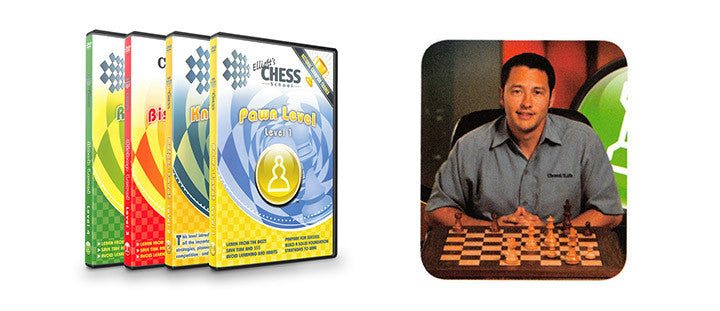
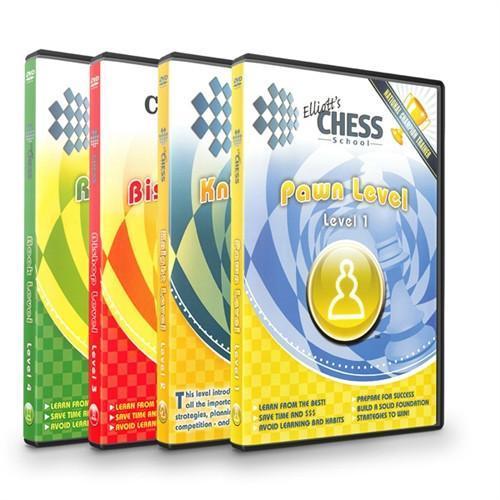
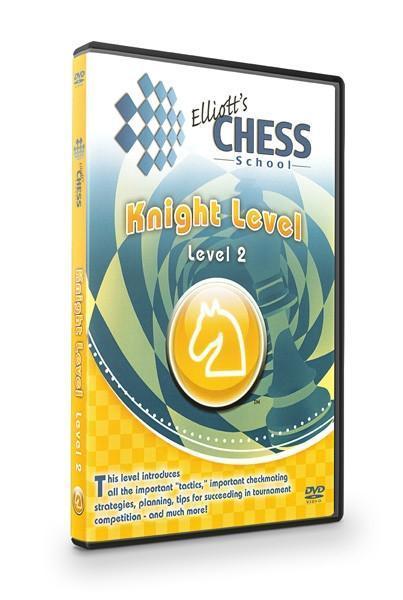
This curriculum's best material, tested in over 100 schools is available to YOUR family as Elliott Chess School on DVD.
Are you read to peak your child's interest and tap their learning potential? Start right and let them thrive with a learning tool they can enjoy throughout life!
Remember, taking just one or two chess strategies with them throughout life will set them up to succeed.
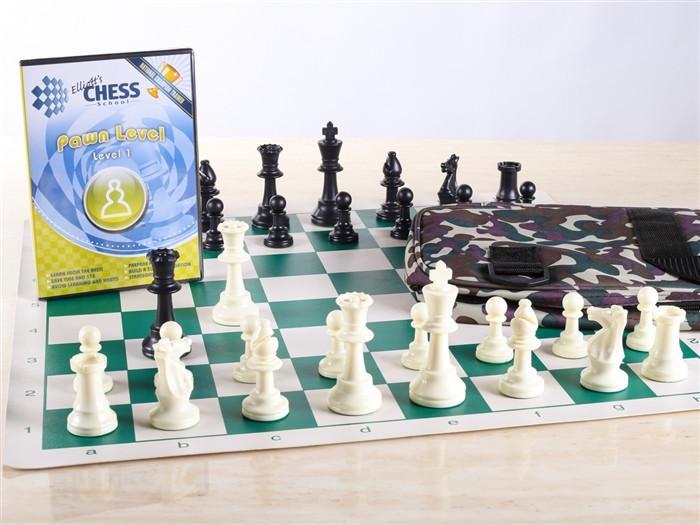
All you need to get started is
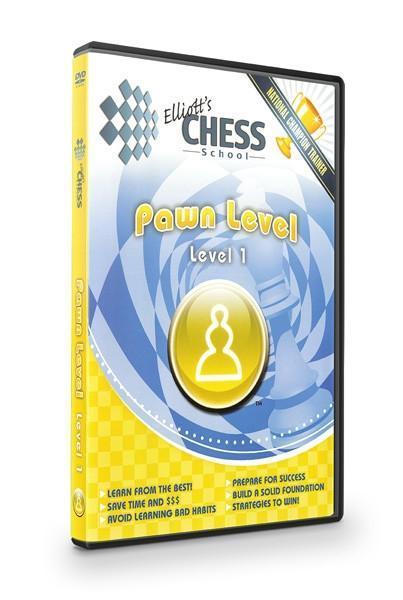
Elliott Chess School Volume 1 - $20
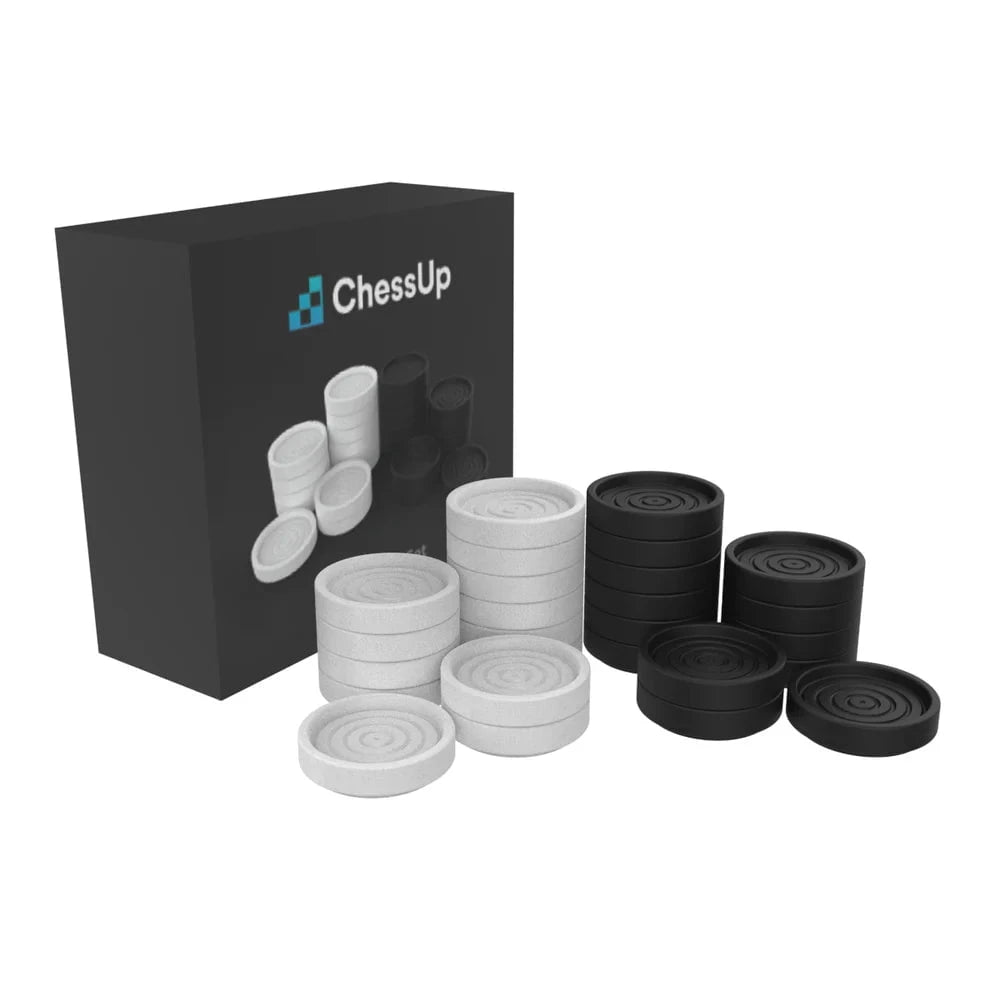
Quality Chess Set - $20
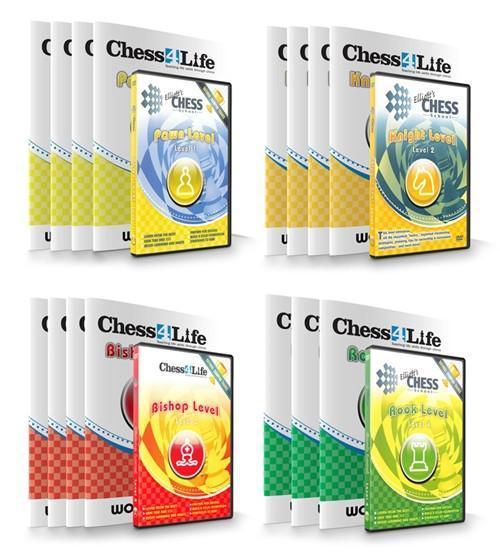
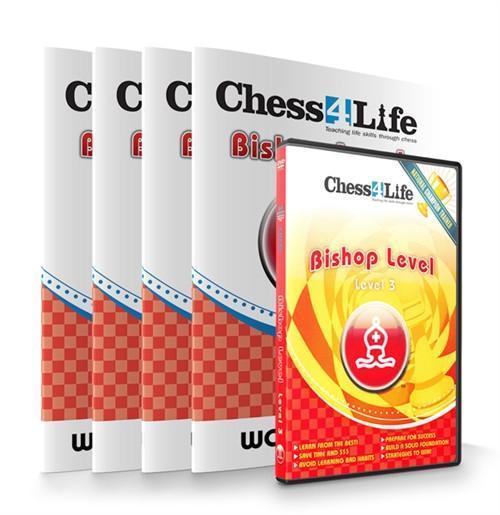
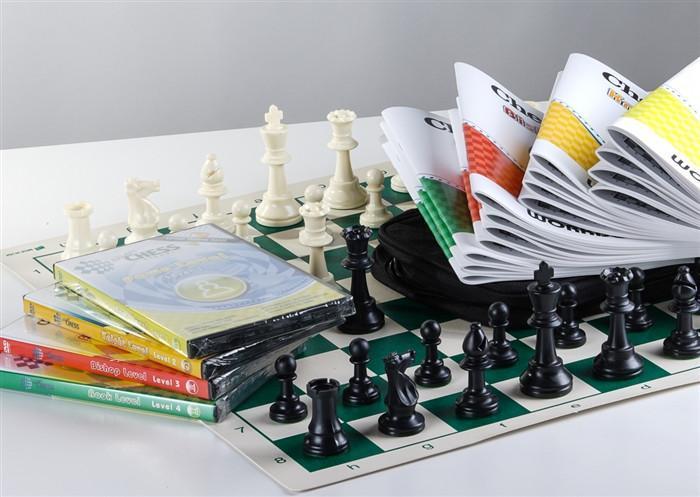
Or take it further with one of those package deals below
To your future
Raphael Neff Chess House
PS. what others are saying
I
wanted to write you and thank you for the chess kit we received from you. My seven year old and I have literally been playing non-stop since. It is amazing to see a seven year old grasp chess so quickly and to see the development as he learns the pieces and their allowed moves. You can see his mind working as strategy begins to formulate, which is fun to see. Soon he will be beating dear ol' dad!
With so much of our world today, including DVD's video games, and the Internet, pulling our families into isolation, we believe in the power of family games. Our family has made it a priority to spend time playing games together and have even set up our Tuesday evenings as a no-technology family night. Chess is becoming a part of that tradition and the resulting quality time with my son and family is irreplaceable.
Travis H., CPA
Washington
Mighty Mom from Naperville, IL
Now that my son is of Chess playing age, I'm trying to remember the details of this game that I played 35 years ago. I previewed the video while doing my elliptical workout! Then, I thought "Would my 6 year old watch it?" We decided to watch one segment each night and then play. On the second night, he wanted to watch 2 segments. A few days later, we were playing a game and he mentioned his "pawn shield". I knew it was sinking in for him. Now we are going through Knight level and he joined the second grade Chess Club. It's fun because we are both learning. However, now that we KNOW more, the games are more challenging.
By Ms. O from Seattle
I
showed this to my very beginners who were having trouble remembering
the moves. There were a lot of ahas! Elliot is enthusiastic and repeats
enough for every kid to get it.
By Alan G in Virginia My
5 year old (Bradley) watched your Knight's Level Chess School DVD and
loved it. Yesterday he watched the algebraic notation lesson and
recorded all the moves from our next chess game on a home-made score
sheet. He lost the game, but he won my heart.
Today he used the score sheet he created from that game to re-create
the entire game from start to finish. What can I say? Please let me
know when more is available. Thanks Elliott,
By Charles H. from Indiana
I'd
been trying to increase my kids interest in chess (after I renewed my
own interest from my younger days). Reading up on Elliot and his
teaching, I thought this might help. Oh, yeah! We went through Pawn
Level. When they were ready, we then went through Knight Level. And we
started playing. A lot. The guys had more confidence and understanding.
Also, they started reviewing on their own as different ideas came to
them.
I enjoyed Elliot's presentation. And, more importantly, my
kids liked him. He comes off as a nice, smart guy who wants to help you
have fun as you learn to think better about chess. His conceptual
breakdowns work well and progress smoothly.
By Alan G in Virginia My
5 year old (Bradley) watched your Knight's Level Chess School DVD and
loved it. Yesterday he watched the algebraic notation lesson and
recorded all the moves from our next chess game on a home-made score
sheet. He lost the game, but he won my heart.
Today he used the score sheet he created from that game to re-create
the entire game from start to finish. What can I say? Please let me
know when more is available.
Thanks Elliott,
By Tim L in Renton, WA They
are absolutely fantastic! Both Johanna and Alysha were captivated
through the first four lessions and wanted to keep going!! I didn't
realize how little I actually knew either! Now we are all excited about
getting out the chess boards again and trying all we learned, and the
girls can't wait to watch lessons 5 through 10! [a few weeks later...]
We just finished the last lession of pawn level and are excited to start
the second DVD! The girls (Johanna & Alysha) Are loving the lessons
and have gotten really excited about playing chess with me! Johanna
even suggested watching the King topic a second time before we play
again because she wanted to master the material! I can't believe how
much I am learning just with the first DVD and I was even in chess club
when I was younger! The way everything is presented is fun and easy to
remember! Thanks again!
By Tom L from Virginia I am using
them in my chess class at the Providence Classical School. Over the
years, I have spent a lot of money buying instructional DVDs/Tapes to
augment my instructional program. Without reservation, Elliott's DVDs
are the most understandable and the ones that my student relate to the
best. My students are in grades 1 to 6.
Why did Elliott produce this program?
NM Elliott Neff recognized need for a consistent, solid teaching system from the basics to advanced levels.
Through his years coaching, Elliott noticed that while there were many teaching tools available, it was difficult to find a clear path that laid a solid foundation so many students would acquire bad habits that were hard to correct, and usually had weaknesses in various areas.
Most students spent time memorizing traps and tricks in order to win games, while NM Elliott in his own personal study as well as in teaching focused on understand chess and how to think, so that he and others would know how to figure out the BEST moves in ANY position, not just memorized positions.
Elliott spent hundreds of hours answering the following question: "Assuming I had a new student who new nothing about chess but was motivated to learn and gain the benefits of chess, desirous of taking the game as far as possible, including national championship level, what would I teach and in what order so as to avoid bad habits, lay the strongest foundation possible, and do it in the most effective way?"
The core of Elliott's Chess School was put together with the following elements:
Six primary levels of skill and knowledge: Pawn, Knight, Bishop, Rook, Queen, and King
Each level consisting of the elements MOST important to master at that point in chess development
Each level building upon the previous material, and preparing the student for the next level of material
Levels based upon knowledge and understanding, not upon tournament ratings which can fluctuate
All lessons put together with the long-term goal in mind - never using "short-term" traps and quick fixes, but with understanding chess being the goal.
Lessons include Audio/visual presentations, practice positions, workbooks to help the student learn, test positions
Certificates of completion are available for students as they complete the material for each clearly defined level
Current topics are for beginners to 1500 rating level with higher level topics still under development.
Curriculum Levels Guide
Pawn
10 Video lessons - Beginner
This
level is designed for students who are just learning how the pieces move and takes them all the way through mastering the most important strategies to begin and play a good game of chess. The level includes learning basic terminology such as "files"and "ranks". Students learn piece values, how to name squares with letters & numbers, how pieces move and capture, as well as the best strategies for each type of piece. Classes emphasize the essential TEAM concepts that are crucial when playing chess.
Knight
26 Video lessons - Basics
In this level, all tactics should learn to be recognized and students should be able to find all one-move-tactics as well as knowing tactic names. Students also learn not to play the
very first tactic that they see, but always take time to look for a better move (maybe there's a checkmate instead of winning the queen!). Students should become quick to recognize targets, including unprotected pieces, pawns and the king or queen. Evaluating your opponent's moves is taught along with the importance of asking vital questions such as, "Why did my opponent move there?" or, "What is the threat?" Students should begin to think ahead and see what their opponent will do in response to their own move. This level also teaches important checkmate and endgame strategies.
Bishop
19 Video lessons - Developing Player
All tactics should be able to be found by students in this level up to two moves deep (much more difficult than the one-move tactics in the Knight
level). This level includes important king and pawn endgames along with other essential strategies for winning and finishing off a game.
Rook
24 Video lessons - Intermediate Player
In the Rook level, three-move tactics and visualization are taught. Students learn game planning (not just tactics) and more advanced endgames. The importance of learning to look for three choices before making a move is shown along with learning to understand imbalances and hoe to evaluate a position.
Queen
future release - total lessons not finalized yet - Strategic Development
Advanced planning is taught in this level (especially the understanding of pawn structures). Students learn efficient analysis of positions and visualization techniques.
King
future release -total lessons not finalized yet - Advanced
Many advanced topics are covered in this level. Opening repertoires are tied into understanding the middlegame plans. In-depth calculation and development of combinational ability is covered in class. Students learn advanced endgame strategies as well as focus on understanding the middlegame positions better. Other concepts include: advanced tactical understanding and development of a quick eye for tactics
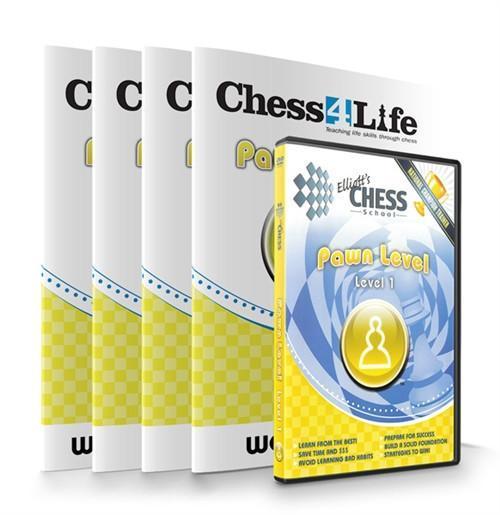
PAWN LEVEL
Introduction of each piece
Understanding of the values of each pieces
Best strategy for each piece
"Pawn Shield" strategy (how to BLOCK your opponent's army)
Learning about the most important squares to control
How to start a chess game with the BEST strategy
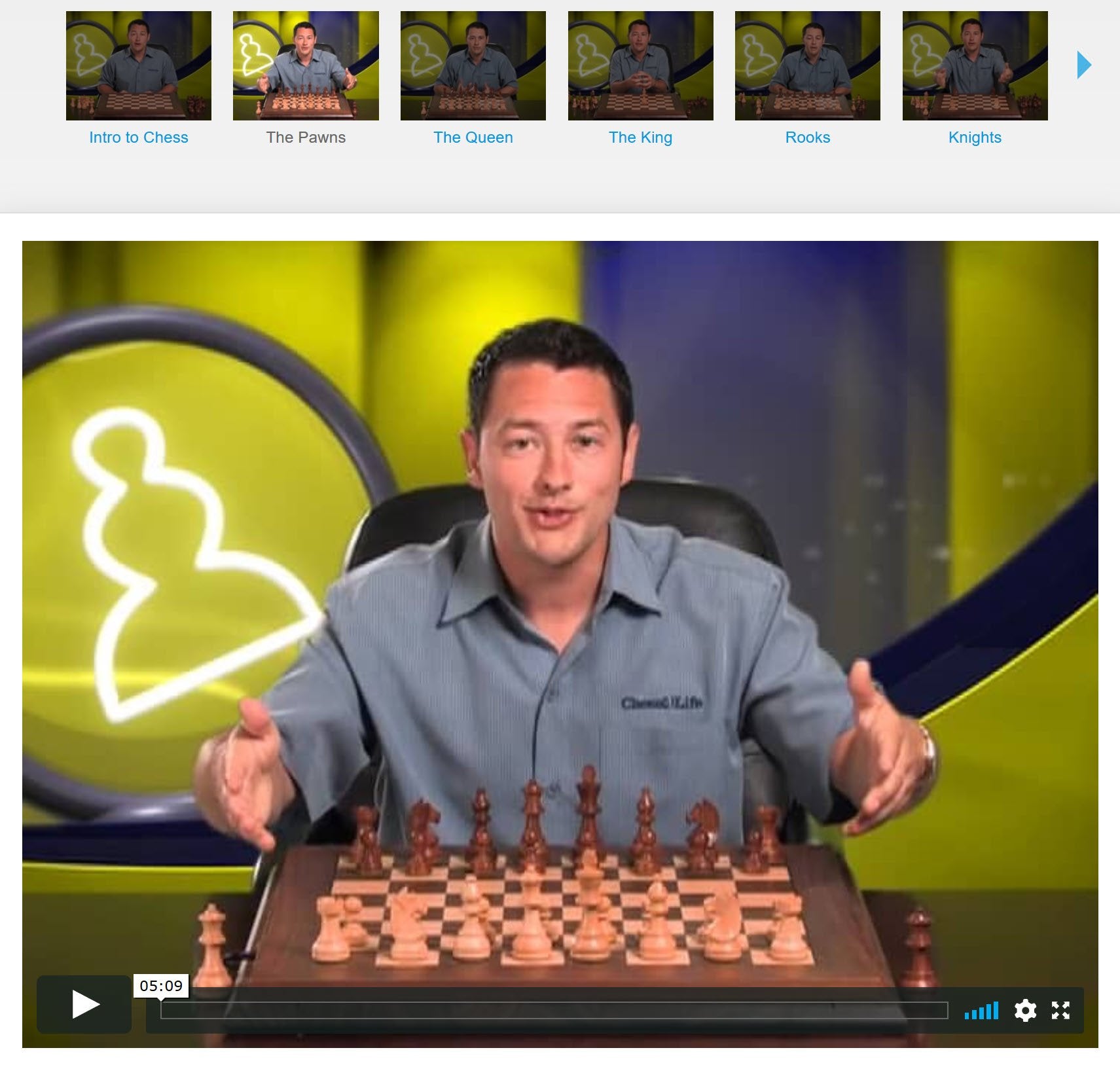
Intro to Chess (board, names of pieces, values
Pawns
Rooks
Bishops
The Queen
The King
Knight
Castling
Pawn shields and when to break it
Development
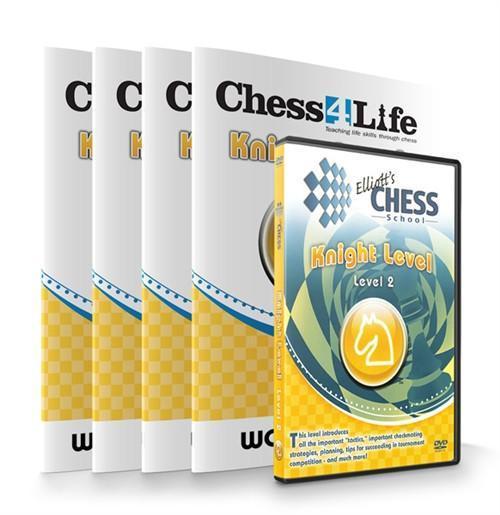
KNIGHT LEVEL
Master the Magic Square strategy for checkmating your opponents every time!
Discover the 'secret' of the 4-move 'Scholar's Mate' checkmate and learn how to turn the tables on your opponent every time they try it!
Opening order
Pigs on the 7th! (using rooks)
Discovered Checks and Attacks
Opening Order (best opening strategy)
'En Passant' (the special pawn move that will amaze your opponents
And many more...
Targets
The Magic Square
The Center
Active Moves I
Opening order
Scholar's Mate
Major Mates
Tactics Intro - when to trade and capture
Pins/Skewers
Discovered Checks/Attacks
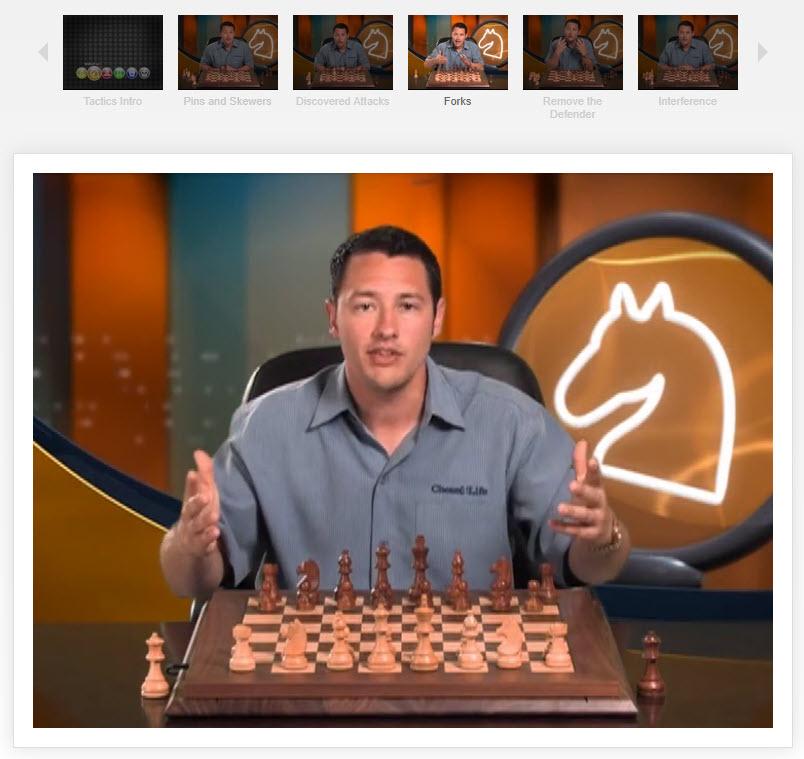
Forks/Double Attacks
Remove the Defender
Interference
Deflection/Attraction
Back-Rank Mate
X-Ray defence/attack
Battery
Checkmate Patterns - 1 move
Finding the BEST moves
King and Queen Mate
King and Pawn endgames I
Algebraic Notation I
en passant rules
Using Rooks
Convert the Advantage I
Win a Game!
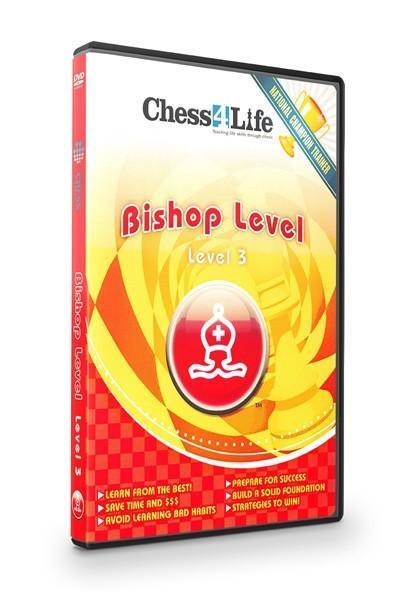
BISHOP LEVEL
Learn how to study using Coach Elliott's techniques that brought him to the Master level in his mid-teens!
Do you "Know Your Board"? Learn Coach Elliott's secrets to playing chess blindfolded!
Planning Level I
King and Rook Mate
Active Moves II
Using Rooks II
Pins/Skewers II
Discovered Checks/Attacks II
Forks/Double Attacks II
Remove the Defender II
Interference
Back-Rank Mate II
X-Ray defence/attack II
Battery II
Checkmate Patterns - 2 moves
Stalemate
King and Pawn endgames II
Smothered Mate
Algebraic Notation II
Know your board
Convert the Advantage II
How to Study I
Win a Game! II
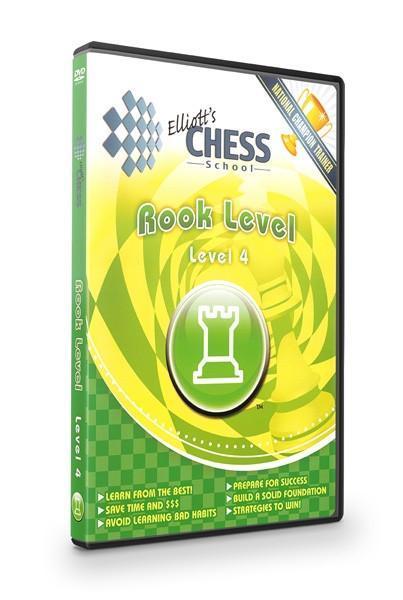
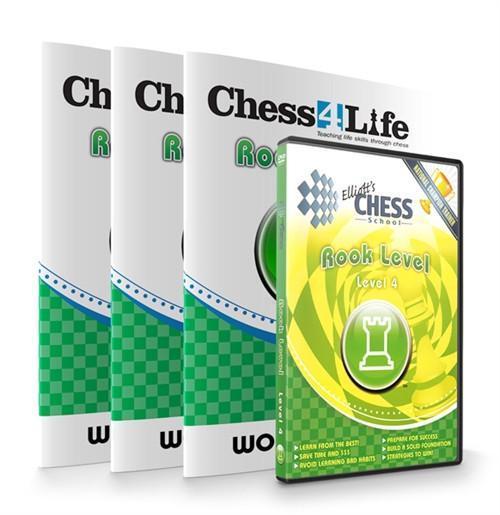
ROOK LEVEL
Learn the eight "Imbalances" that Coach Elliott uses to "master" planning
Learn to win the battles between Bishops and Knights
Learn "Rooks vs. Pawns"
Learn "Minor Piece Endgames"
Master Power Checks
Advanced Pin Strategy
Discovered Checks/Attacks
Checkmate Patterns - 3 moves
King and Pawn endgames III
King and Pawn endgames IV, Critical Squares
King and Pawn endgames V, outside passed pawn
King and Pawn endgames VI, pawn majorities
King and Pawn endgames VII, pawn breakthroughs
Planning Level II (Imbalances Overview)
Material Imbalance
Space Imbalance
Pawn Structure Imbalance (overview - there are many types)
Superior Minor Pieces (battle of Bs and Ns)
Control of Key Files and Key Squares (strong squares)